


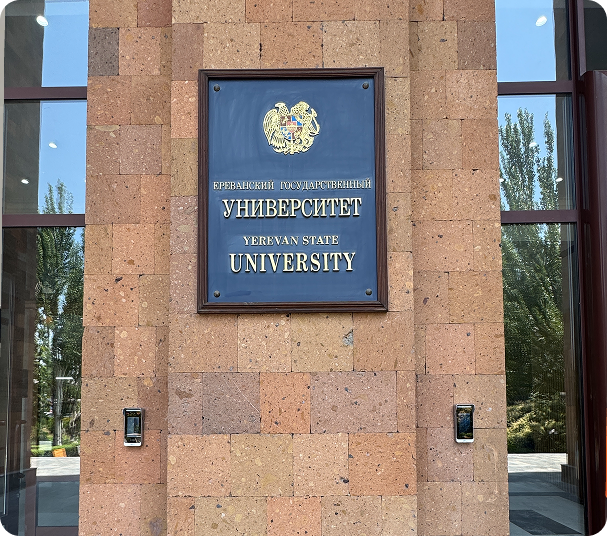
Yerevan State University (YSU) is one of the first and largest public universities in the Republic of Armenia.
With its numerous faculties, administrative divisions, and extensive workforce, the university plays a leading role in advancing higher education and scientific research while ensuring the continuous development of its academic and research activities.
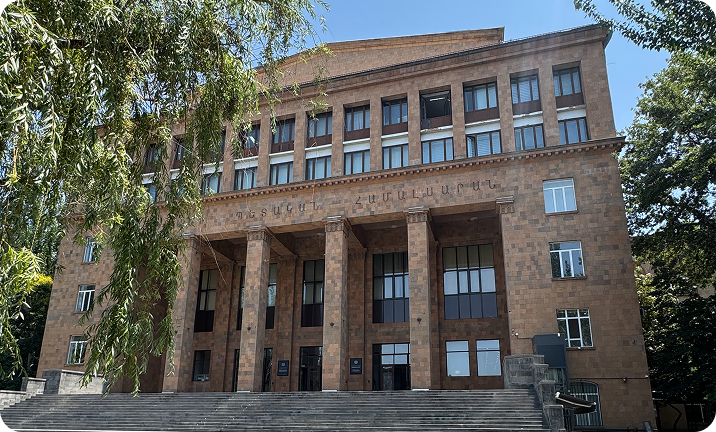
The digital transformation of educational institutions has become a key factor in improving operational efficiency, enhancing security, and ensuring transparency across organizational processes. In environments with a large workforce, multiple departments, and dynamic day-to-day operations, there is an increasing need for accurate time and attendance management, secure access control, and centralized data processing.
To address these needs, Yerevan State University implemented face recognition terminals integrated with the OnTime Time & Attendance Management System, creating a more modern, automated, and efficiently managed working environment.
The recording and management of employees’ attendance and working hours required additional time and human resources. Collecting and consolidating data from multiple departments made overall monitoring and control more difficult.
Time and attendance information needed to be available within a single system to enable faster analysis, reporting, and decision-making.
The influence of manual processes and repetitive administrative tasks increased time consumption and added operational burden, reducing overall efficiency.
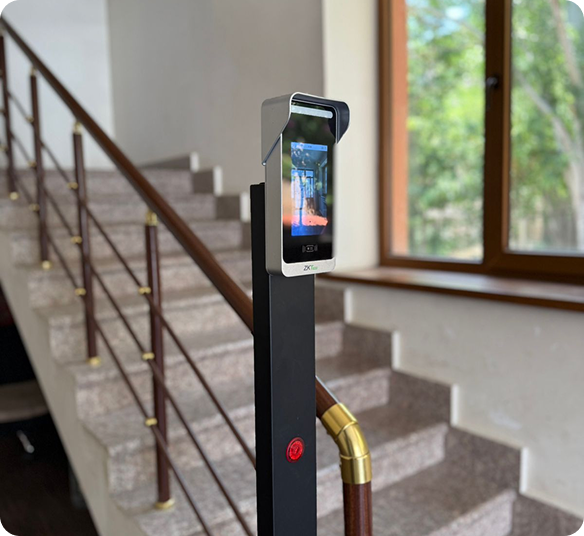
Face recognition terminals were installed to provide fast, contactless, and highly accurate identification for employee access control and attendance registration.
The OnTime system centralized the collection, processing, and reporting of time and attendance data within a single, unified platform.
Attendance records captured by the face recognition terminals are automatically synchronized with the system, minimizing manual intervention while significantly improving data accuracy and reliability.
Authorized departments gained real-time access to attendance data, enabling more effective workforce monitoring, improved discipline management, and faster, data-driven decision-making.
A detailed assessment of the university’s operational workflows was conducted to identify key requirements and define the overall implementation strategy.
Suitable face recognition terminals were selected, and the architecture for implementing the OnTime Time & Attendance Management System was designed to meet the university’s operational needs.
The face recognition terminals were installed, integrated with the OnTime system, and configured to ensure reliable data synchronization and seamless communication between devices and the central platform.
The solution was configured according to the university’s requirements, followed by comprehensive testing to verify system accuracy, stability, and ease of use before being fully commissioned for daily operation.
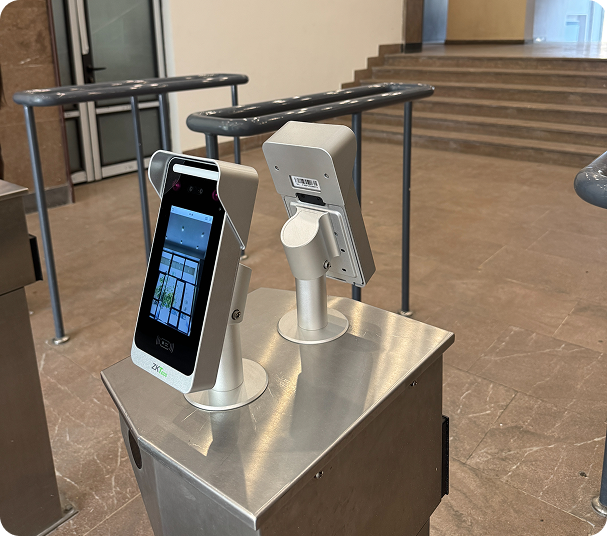
The implementation of face recognition terminals and the OnTime Time & Attendance Management System at Yerevan State University marked an important step toward a more digitalized, efficient, and data-driven management model.
The solution automated time and attendance tracking, improved the accuracy and reliability of workforce data, reduced administrative workload, and established a centralized management environment for more effective monitoring and reporting. By providing real-time access to attendance information, the system also enables faster, well-informed decision-making while enhancing operational efficiency across the university.
